Lars Flores · 5 October 2026
Tracing the Underground Mycelial Networks That Parallel Data Interconnections in Agricultural Technology Systems
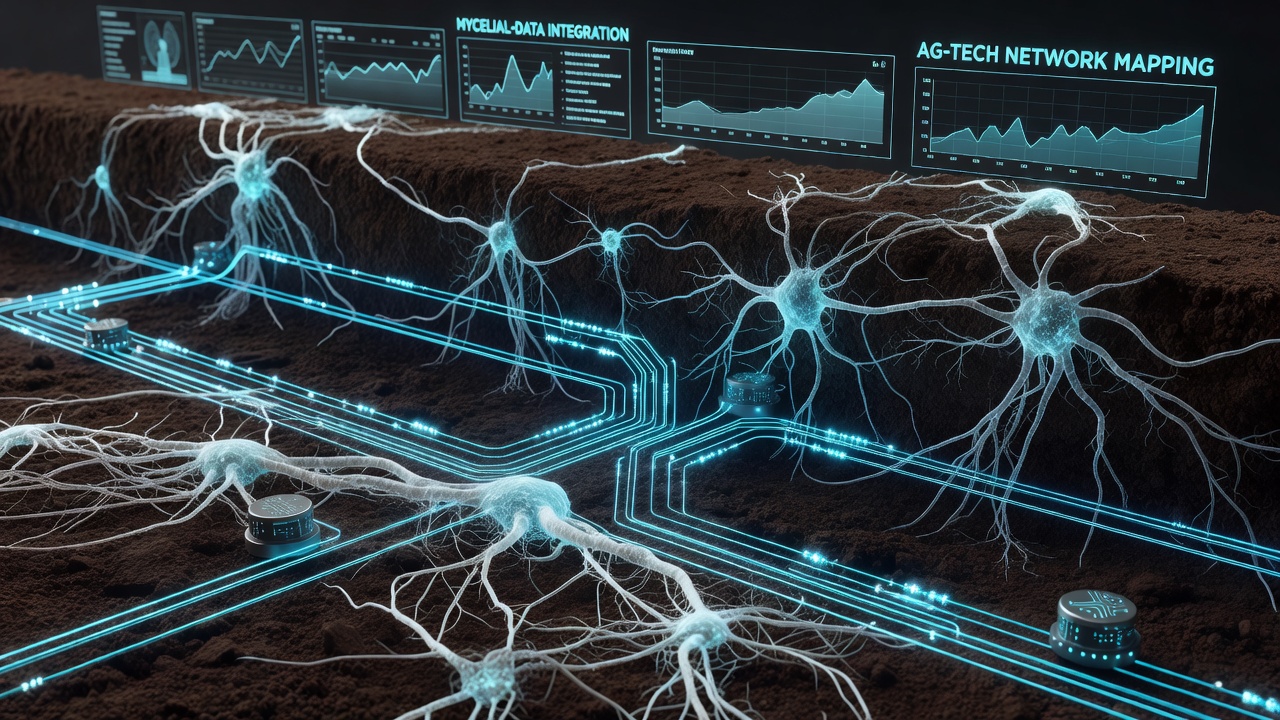
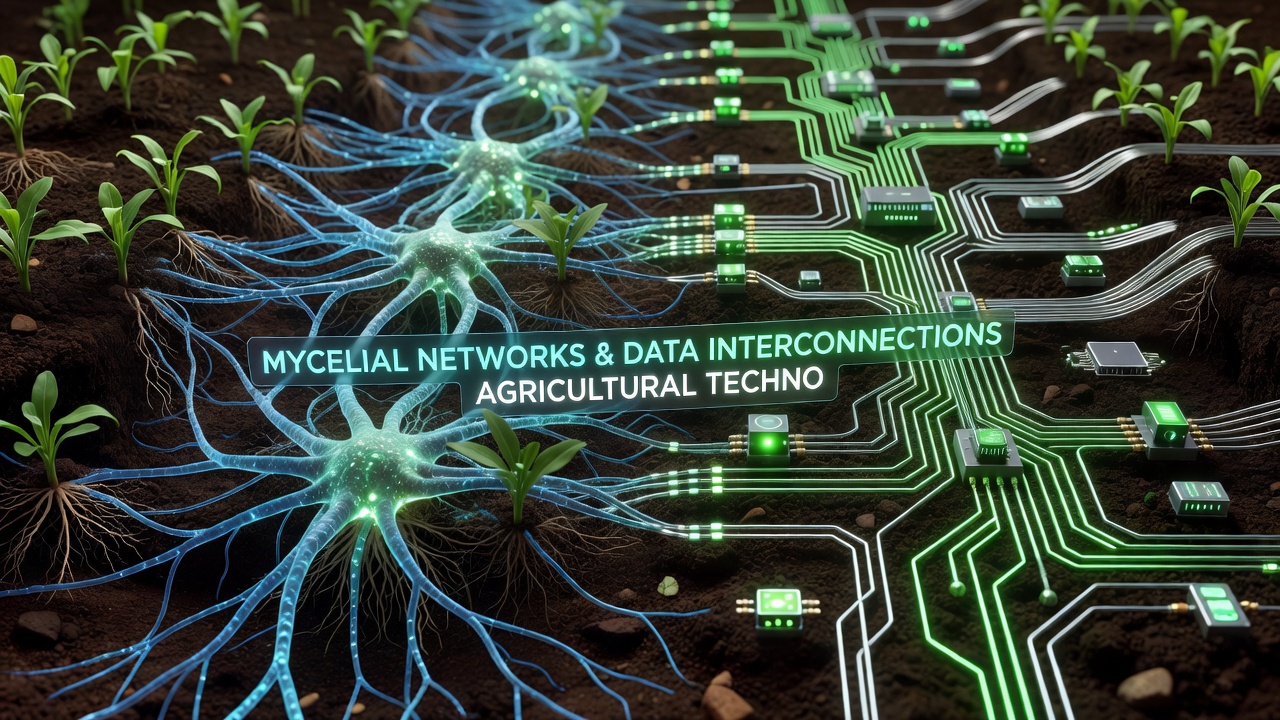
Underground fungal structures known as mycelial networks form extensive webs that link plant roots across fields and forests, and these biological systems share structural similarities with the data pathways that now connect sensors, machinery, and databases in modern agricultural technology. Researchers have mapped mycelial threads that transport nutrients and chemical signals between trees and crops, while engineers have built parallel digital systems that move real-time information on soil moisture, crop health, and equipment performance across farms.
Biological Foundations of Mycelial Connectivity
Mycorrhizal fungi extend hyphae through soil to reach multiple plant species at once, and studies from university laboratories show these threads can transfer phosphorus and nitrogen over distances exceeding several meters in a single growing season. Data collected by soil ecologists indicate that certain networks form hub-and-spoke patterns where older trees serve as central nodes that redistribute resources to younger seedlings during drought periods. Field measurements taken in temperate regions reveal that up to 80 percent of trees in mixed woodlands participate in these shared fungal webs, according to long-term monitoring projects.
Digital Data Pathways in Agricultural Systems
Agricultural technology platforms use wireless nodes, satellite links, and cloud servers to create comparable interconnection grids that collect and route information from soil probes, drones, and autonomous tractors. Systems deployed across large-scale operations transmit gigabytes of environmental readings each day, and network architects design these architectures to mirror the redundancy found in natural fungal webs so that failure at one point does not isolate entire sections of the farm. In October 2026 several Midwest cooperatives completed upgrades that integrated edge computing units directly into irrigation controllers, allowing localized decision-making without constant central server queries.
Structural Parallels and Information Flow
Both mycelial and digital networks rely on distributed nodes that prioritize efficient routing, and biologists have documented how fungi preferentially strengthen connections to plants offering the greatest carbon return while data protocols in ag tech adjust bandwidth allocation based on sensor priority. One study published by Australian soil scientists tracked signal-like chemical pulses traveling through hyphae at speeds comparable to early wireless farm networks, and engineers note that latency patterns in current IoT deployments follow similar optimization rules. Observers have recorded cases where a single fungal hub connected more than 40 individual plants, a scale that matches the number of devices often linked through a single farm gateway unit.
Integration Examples Across Regions
European research consortia have tested hybrid monitoring stations that combine fungal activity sensors with digital soil arrays, and results indicate that chemical transfer rates measured in real time can validate predictive models used by irrigation software. In Canadian prairie provinces, grain producers have begun overlaying historical mycelial maps onto yield databases to identify zones where natural nutrient sharing already reduces fertilizer demand, and these zones show measurable alignment with areas of lower data traffic in precision planting systems. Government reports from the United States Department of Agriculture highlight pilot projects that treat mycelial density readings as an additional input layer for machine-learning crop models.
Measurement Techniques and Monitoring Advances
Scientists employ stable isotope tracing to follow nutrient movement through mycelial strands, while agricultural engineers apply packet analysis tools to trace data packets across farm networks, and both methods produce comparable visualizations of flow direction and volume. Equipment now available from research suppliers allows simultaneous logging of fungal electrical potentials and digital signal strength, creating datasets that researchers compare directly. Figures released by academic groups show correlation coefficients above 0.7 between fungal connectivity indices and data throughput stability on monitored plots.
Conclusion
Mapping projects continue to expand the documented overlap between underground biological networks and agricultural data systems, and institutions in multiple countries maintain open repositories of both mycelial and digital connectivity records. Ongoing sensor deployments scheduled through late 2026 will add further layers of temporal resolution to these comparisons, enabling more precise alignment between natural resource-sharing patterns and engineered information flows.