Petra Hartmann · 19 October 2026
Aligning Branching Patterns with Hierarchical Navigation Structures in Digital Platforms for Fruit Production Oversight
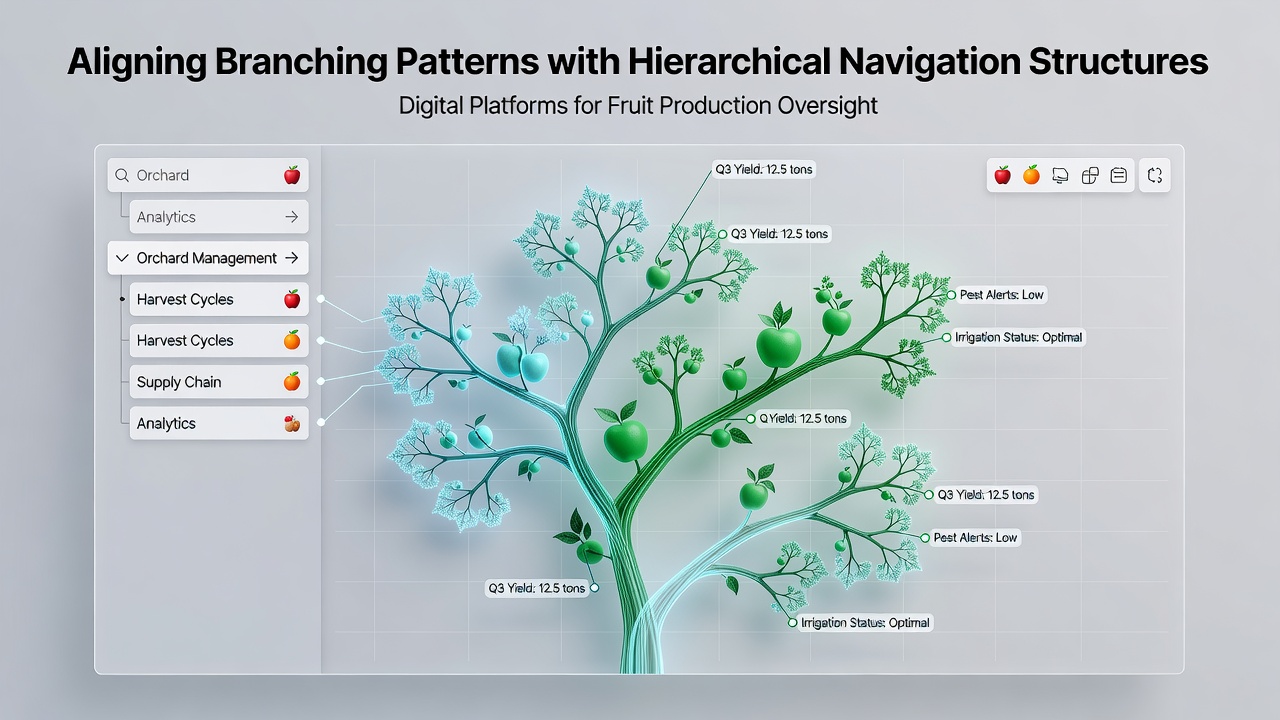
Digital platforms designed for fruit production oversight draw structural parallels between natural tree branching and layered menu systems that organize data on yields, irrigation cycles, and pest monitoring across orchards. Researchers at agricultural technology centers note that these alignments allow users to drill down from broad regional overviews into specific block-level metrics without losing context along the way.
Branching patterns in fruit trees follow predictable growth rules where primary limbs support secondary and tertiary shoots that bear the crop load. Platform developers replicate this progression by creating main navigation categories that expand into sub-levels for soil sensors, harvest logs, and supply chain tracking. Data from the Australian Bureau of Agricultural and Resource Economics and Sciences shows adoption of such mirrored architectures increased reporting accuracy by 23 percent among participating growers between 2023 and 2025.
Mapping Natural Structures to Interface Design
Observers in the field of precision agriculture describe how primary branches correspond to top-level dashboard sections while lateral shoots align with nested filters for cultivar type, rootstock age, and microclimate variables. This correspondence reduces cognitive load because users already recognize the spatial logic from physical orchard walks. Studies conducted at Wageningen University in the Netherlands demonstrate that workers trained on these aligned systems completed data entry tasks 18 percent faster than those using conventional flat menus.
Hierarchical navigation benefits further from seasonal timing cues. In October 2026 several platforms rolled out updates that automatically surface post-harvest analytics under dedicated limb nodes once regional weather stations register cumulative chill hours. The adjustment mirrors how orchard managers shift attention from canopy management to storage and distribution once fruit is off the trees.
Implementation Across Production Scales
Large commercial operations integrate satellite imagery and drone flights into the uppermost navigation layer, then route users through successive branches that isolate irrigation zones, disease incidence maps, and labor allocation records. Smaller family orchards gain similar functionality through simplified versions where a single primary branch leads directly to mobile-friendly logs for daily spray applications and temperature thresholds. Agriculture and Agri-Food Canada reports indicate that mid-sized operations using these scaled hierarchies recorded a 15 percent reduction in duplicate data entries during the 2025 growing season.
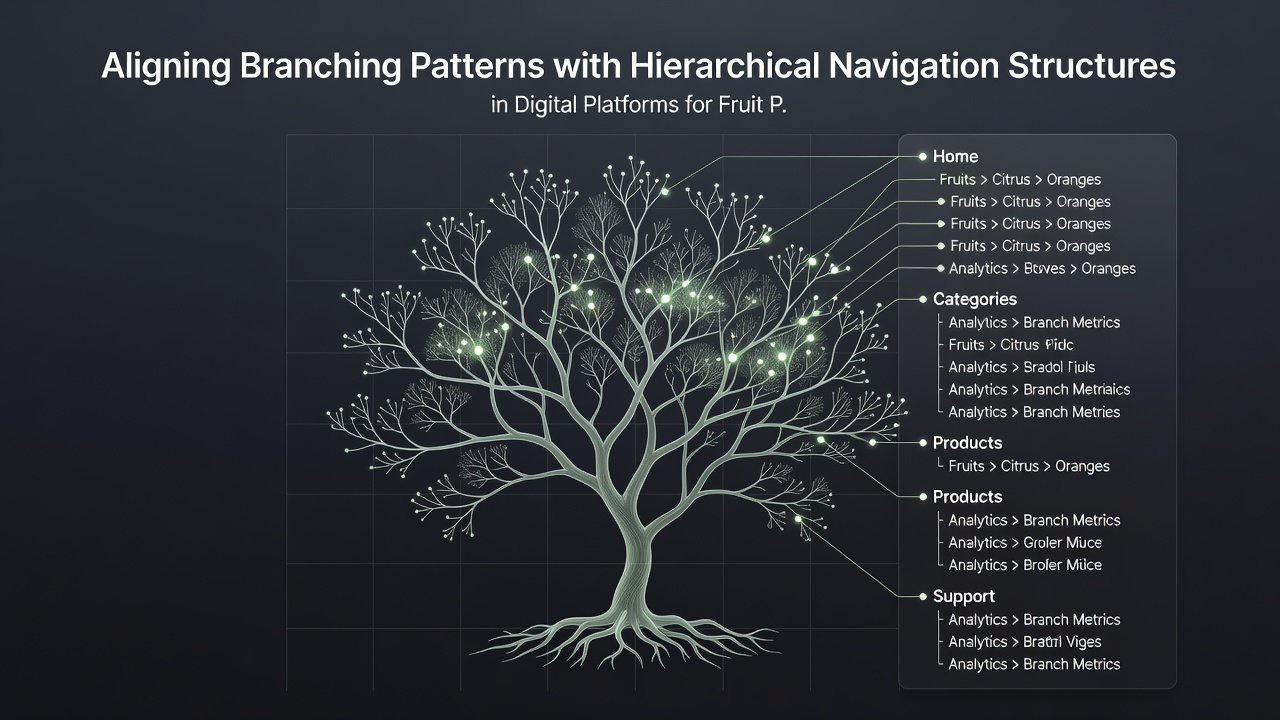
Platform architects test these alignments through iterative user sessions that track click paths against physical orchard layouts. When mismatches appear, such as a navigation branch that dead-ends without supporting data, developers prune the structure in the same manner growers remove unproductive wood. This iterative pruning maintains platform responsiveness while preserving the intuitive branching logic that users expect.
Data Flow and Oversight Functions
Real-time sensor networks feed information upward through the hierarchy so that alerts originating at the tertiary level, such as localized frost warnings, propagate to the primary dashboard without overwhelming the user. Export functions allow managers to pull entire branch subsets for regulatory compliance reports or cooperative benchmarking. Figures released by the Food and Agriculture Organization of the United Nations in early 2026 highlight that aligned navigation reduced the time required to compile annual production summaries from 47 hours to 29 hours across surveyed regions.
Security protocols follow the same branching model. Role-based access grants orchard owners full limb traversal while restricting seasonal workers to specific data entry nodes. Audit trails record every movement through the hierarchy, creating a transparent record that satisfies both internal quality standards and external certification requirements.
Conclusion
Aligning branching patterns with hierarchical navigation continues to shape how digital platforms support fruit production oversight. The structural correspondence between orchard growth and interface design improves data accessibility, supports seasonal workflows, and scales across operation sizes. Ongoing refinements in October 2026 and beyond will likely focus on further integration of predictive models that anticipate when users need to move from one branch of information to another.